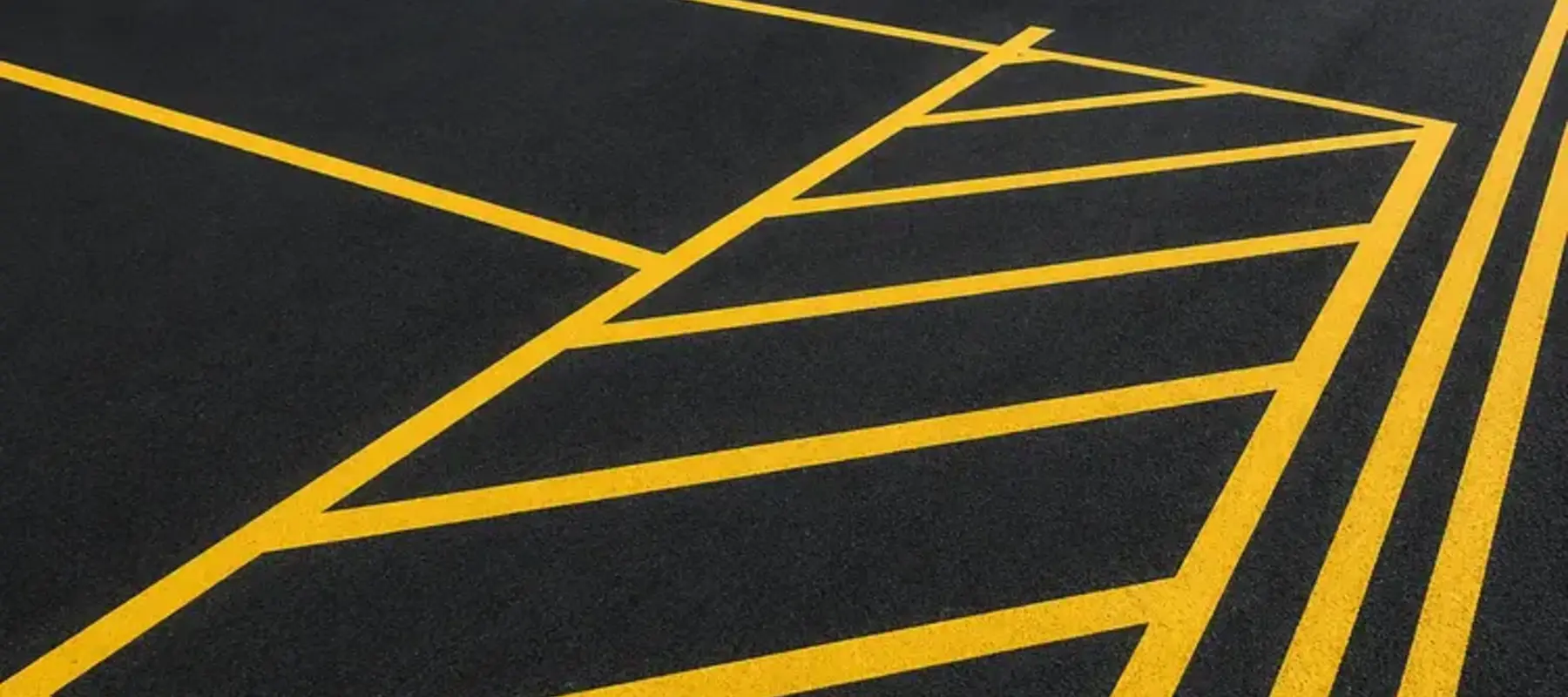
If you have ever parked up in a supermarket or visited a busy retail park, chances are high that you have seen thermoplastic line marking without even realising it. It is one of the most widely used line marking systems in the UK and plays a very important role in keeping vehicles and pedestrians moving safely in public and commercial spaces.
For many businesses and site managers, however, the term itself can actually be a little bit confusing. What exactly is thermoplastic line marking and how is it any different from more traditional paint? Is it actually worth the extra investment? These are all very common questions, particularly for businesses that are planning a new development or refreshing an existing site.
The simple answer is that thermoplastic line marking is a highly durable and long lasting method of creating road and car park markings. It is specially designed to cope with heavy traffic and challenging weather conditions, which makes it one of the most reliable solutions available.
What is thermoplastic line marking?
Unlike standard line marking paint, thermoplastic is a specialist material that becomes liquid when it is heated to a high temperature. Once it has been applied to a prepared surface, it cools very quickly and will then form a tough protective layer that bonds to the ground beneath it.
The material itself is made from a combination of synthetic resins, pigments, fillers, and reflective glass beads. These ingredients all work together in order to produce markings that are extremely durable, but also highly visible during both the day and at night.
One of the biggest reasons thermoplastic has become so popular is its ability to withstand constant use. In a busy commercial environment, such as an industrial site, ordinary paint can gradually wear away under repeated vehicle movements. Thermoplastic offers greater resistance to this type of wear, helping markings stay visible for much longer.
This is one of the reasons that many local authorities, warehouses, schools, retail parks, and commercial premises will often choose thermoplastic over any other form of line marking.
How is thermoplastic line marking applied?
Applying thermoplastic line marking is a skilled process that will require specialist equipment along with careful preparation. Simply heating the material and applying it to the ground will not be enough if you are looking to guarantee a long lasting finish.
The existing surface must first be cleaned thoroughly and then prepared properly. Mini bits of dust, and loose debris can reduce adhesion and shorten the lifespan of the markings. Existing markings may also need to be removed or treated before new work begins.
Once the surface is ready for the paint, the thermoplastic material is heated until it becomes molten. It can then be applied using specialist machinery or hand operated equipment depending on the type of project. Reflective glass beads can also be incorporated into the finish in order to improve visibility in low light conditions.
One of the key benefits of this process is the speed at which the material hardens. In many situations, areas can be reopened relatively quickly, helping to minimise disruption to businesses and the public.
At On Point Markings, every project begins with assessing the site itself in detail. Factors such as traffic levels and the current condition of the surface, along with the intended use all help determine the most suitable approach.
Where is thermoplastic line marking used?
Thermoplastic line marking is incredibly versatile, which explains why it can now be found across so many different environments throughout the UK.
Some of the most common applications include:
- Commercial and public car parks.
- Roads and highway markings.
- Warehouse and factory floors.
- Schools and playgrounds.
- Retail parks.
- Industrial estates.
- Distribution centres.
- Electric vehicle charging bays.
- Pedestrian crossings and walkways.
While the markings themselves may look quite simple at first glance, they actually play a very important role when it comes to organising traffic and improving safety, while also helping sites operate efficiently.
A clearly marked car park can reduce any confusion for drivers, while effective warehouse floor markings help separate pedestrians from moving vehicles. In both of these cases, good line marking contributes to a safer environment for everyone using the site.
Why is thermoplastic so popular?
There are several reasons why thermoplastic line marking has become one of the most widely used options available in the UK today.
Perhaps the biggest advantage that we need to speak about first is the durability aspect. Because the material forms a thicker and stronger layer than traditional paint does, it is able to withstand heavy traffic and daily wear much more effectively.
Visibility is another major benefit of this type of line marking. Bright colours paired up with reflective properties make markings much easier to see during periods of poor weather and in darker conditions, this helps to improve safety for both drivers and pedestrians.
Another benefit of thermoplastic is that it also requires relatively little maintenance compared to some alternative options. Although the initial installation cost can be slightly higher than more conventional types of paint, the longer lifespan often makes it a more economical choice over time.
Many Norfolk based businesses also appreciate the professional appearance that it creates. Fresh and crisp looking markings can make a significant difference to the overall presentation of a commercial site and help to create a positive first impression for customers and visitors.
Is thermoplastic better than traditional line marking paint?
Both options do have their place, and the right choice will depend completely on the intended application.
Traditional paint can be suitable for temporary works or for projects in lower traffic areas that may also have the main priority of keeping initial costs down.
Thermoplastic is usually the preferred solution when durability and visibility, along with long term value are the most important. Busy car parks and industrial sites will benefit from the additional strength and longevity the material provides.
Rather than viewing one option as better than the other, it is usually much more helpful to consider which product best suits the environment and expected levels of use.
Final Thoughts on Thermoplastic Line Marking
So, what is thermoplastic line marking? In simple terms, it is a durable and highly visible line marking system that is specially designed to provide clear guidance and improve safety across a wide range of environments.
Its ability to withstand heavy traffic and changing weather conditions has made it a very popular choice for commercial premises, industrial sites, schools, roads, and car parks throughout East Anglia and the rest of the UK.
While the markings themselves may seem like quite a small detail, they do often play a very significant role in keeping sites well organised and looking professional, along with helping them to stay safe for everyone who uses them.
So, if you are planning a new line marking project or considering upgrading existing markings, seeking professional advice can help to ensure that you choose the most appropriate solution for your site. At On Point Markings, every project is approached with a focus on quality, longevity, and delivering clear results with minimal disruption.
Frequently Asked Questions
What is thermoplastic line marking?
Thermoplastic line marking is a durable marking system that uses heated materials to create long lasting road, car park, and industrial markings.
How long does thermoplastic line marking last?
The lifespan varies depending on traffic levels and site conditions, but professionally installed thermoplastic can provide many years of reliable performance.
Is thermoplastic line marking waterproof?
Yes. Once cooled and hardened, thermoplastic is highly resistant to water and performs well in a variety of weather conditions.
Where is thermoplastic line marking commonly used?
It is commonly found in car parks, warehouses, roads, schools, industrial estates, retail parks, and commercial premises.
Is thermoplastic better than paint?
For many high-traffic environments, thermoplastic offers improved durability and a longer lifespan, although traditional paint can still be suitable for some applications.