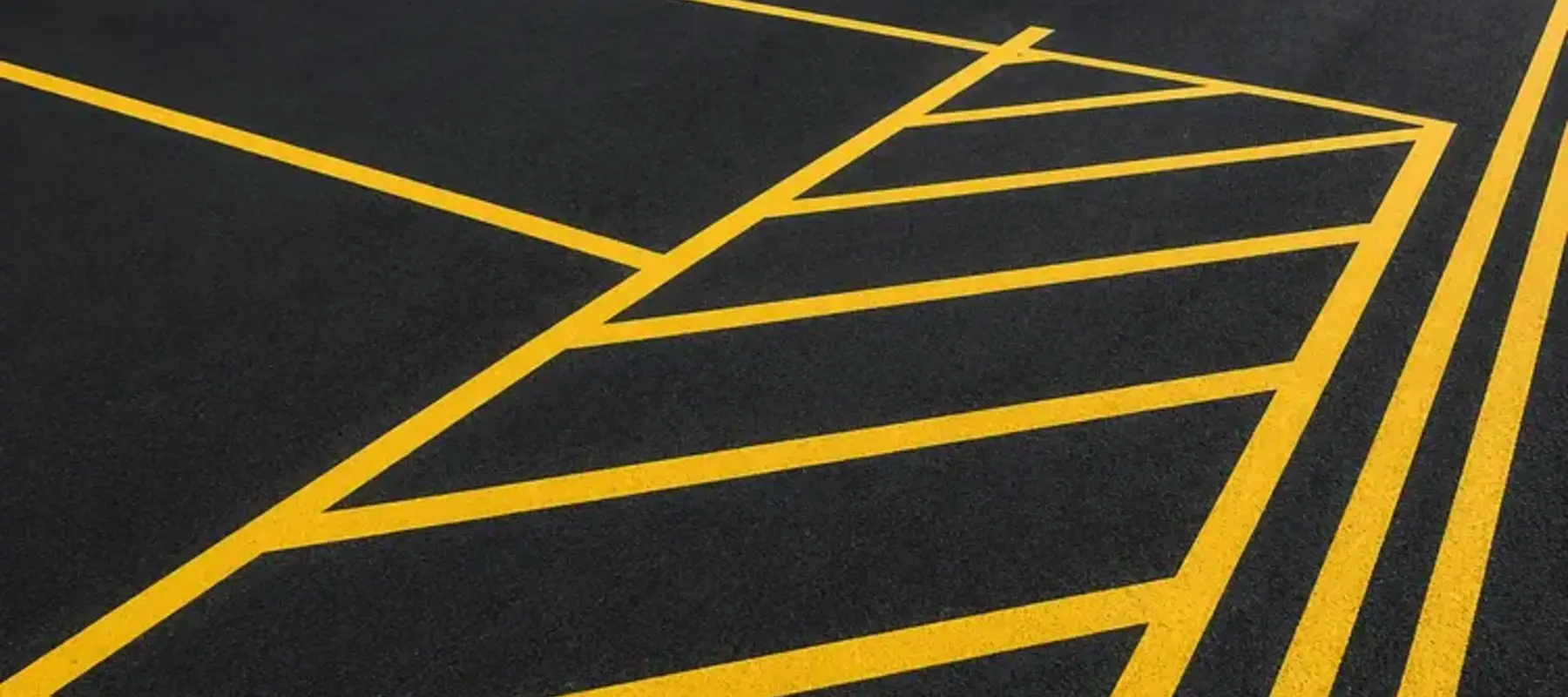
Clear line markings play an extremely important role when it comes to keeping car parks and warehouses safe and organised. However, even markings that have been applied professionally will eventually begin to wear away.
So, how long does line marking last?
There isn’t a single answer when it comes to lifespan that will apply to every single site. Line marking can remain effective for anywhere from several months to several years, but this will always depend on the material that has been used and the surface that it has been applied to, along with the traffic levels, weather conditions the have been exposed to.
A lightly used private car park, for example, may retain clear markings for considerably longer than a busy commercial site that has had many vehicles going over the same lines day after day.
Understanding exactly what will have the biggest effect on the lifespan of line markings can help you with choosing the right materials and help you determine when existing markings need to be refreshed.
What Affects How Long Line Marking Lasts?
The durability of line marking will be influenced by many different factors. Two sites that are using the exact same marking materials can experience very different results depending on how the area is used.
Some of the most important factors will include:
- The type and condition of the surface
- The line marking material that is used
- The amount of vehicle or foot traffic
- Exposure to weather
- The weight and type of vehicles that are using the area
- How well the surface was prepared
- The quality of the original application
- Exposure to chemicals, oils and other contaminants
This is why professional line marking should be approached according to the individual site rather than using the exact same products and application method everywhere.
At On Point Markings, we look to assess the surface and intended use of an area before recommending what we feel is the most suitable approach. This helps to make sure that the markings are appropriate for the environment in which they will actually be used.
How Long Does Car Park Line Marking Last?
In most cases, car park line marking will remain effective for several years, although its actual lifespan will vary considerably from site to site.
A small office car park with relatively little traffic may be able to retain its markings for many years before any significant refresh is required. When on the other hand a busy supermarket or a retail park could experience wear much sooner than this.
Areas where vehicles are regularly turning are particularly susceptible to wear, which means that entrance and exit points can therefore fade much quicker than parking bays that are located in quieter sections of the same car park.
This is also why it is always worth inspecting a car park as a whole rather than assuming that every marking needs repainting at the same time.
Does the Type of Line Marking Material Matter?
Yes, the material that is used can have a very significant impact on the durability of line markings, as different surfaces and environments will require different products, which is one reason choosing a marking material based purely on price can prove to be a false economy.
Line Marking Paint
Specialist line marking paints can be used across a wide range of commercial environments. When they are correctly matched to the surface and are properly applied, they can provide a durable and highly visible finish.
The exact lifespan will depend heavily on traffic and environmental conditions.
Thermoplastic Markings
Thermoplastic markings are most widely used in areas where durability and visibility are particularly important.
The material is applied using heat and bonds strongly to suitable surfaces, which can make thermoplastic a very effective option for areas which are exposed to regular vehicle traffic. If you would like to understand more about how the material works and where it can be used, take a look at our guide to what thermoplastic line marking is.
However, no material is automatically suitable for every single surface and site conditions should always be considered in detail before deciding which system to use.
Epoxy Resin
Epoxy resin systems can provide a highly durable finish and can often be well suited to demanding commercial and industrial environments.
They can be particularly useful in warehouses and factories where the floor needs to be able to cope with regular traffic and operational demands.
The correct preparation of the surface is especially important with these systems, as poor preparation can compromise even a high-quality product.
Does Traffic Affect the Lifespan of Line Markings?
Traffic is one of the biggest factors affecting how long line marking lasts.
Every time a tyre passes over a marking, particularly while turning or braking, friction is then created. When this happens repeatedly over thousands of vehicle movements, this gradually wears on the surface of the marking.
Heavy vehicles can place even greater demands on marked areas.
Warehouses face very similar challenges, with forklifts and pallet trucks repeatedly crossing the same sections of flooring throughout the working day.
For this reason, it is common that the higher traffic zones are likely to need attention sooner than markings elsewhere on the same site.
How Does the Surface Affect Line Marking Durability?
The condition of the underlying surface is extremely important.
Line markings always need to adhere properly to the surface that is beneath them. If the existing surface is dirty or damaged, the marking may deteriorate prematurely.
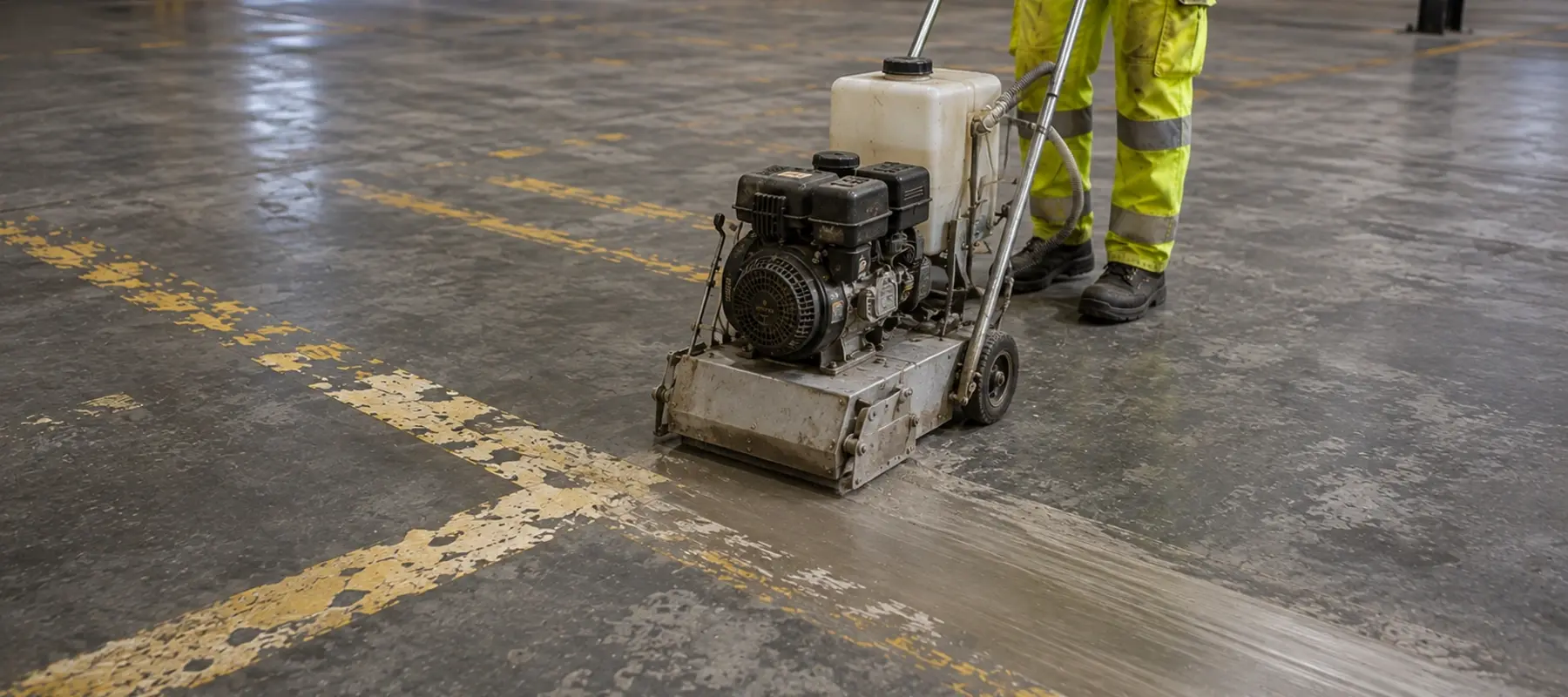
Preparation for this will usually involve thoroughly cleaning the area and removing any loose dirt or existing markings where necessary. If existing lines need to be taken up first, our guide explains how to remove line marking paint and the different methods that can be used.
The surface itself also matters. Asphalt, concrete, and internal industrial flooring all have different characteristics, so the most appropriate marking system can vary.
Professional line marking contractors should consider these factors before work begins rather than simply applying paint over whatever is already there.
Does Weather Cause Line Markings to Fade?
Outdoor markings are constantly exposed to conditions that are regularly changing.
Rain, frost and constant temperature changes can all contribute to deterioration as time passes by. Standing water and poor drainage can also create additional challenges in some locations.
Our Great British climate means that outdoor markings need to be able to withstand a combination of wet weather and temperature fluctuations while also being durable enough to endure regular traffic flow.
Correct product selection and application can help maximise their lifespan, but outdoor markings will eventually require maintenance at some point.
How Can You Make Line Marking Last Longer?
The most effective way to improve the lifespan of line marking is to make sure that you get the fundamentals right from the beginning.
Good surface preparation is particularly important, as even an excellent product is applied to a poorly prepared surface can lead to disappointing results.
Choosing a marking system that suits both the surface and how the site is being used is just as important.
Regular inspections can also help with the identification of areas of wear before the markings become difficult to see. This allows individual sections to be refreshed when required rather than waiting until the entire layout has become quite badly deteriorated.
For busier commercial sites, a planned maintenance approach can be very useful.
When Should Line Markings Be Repainted?
You do not necessarily need to wait until the current markings have completely disappeared before repainting them.
The main consideration should be whether the markings are still clearly performing their intended function.
For example, parking bays should always be very easy for drivers to identify. Pedestrian walkways should provide clear guidance, and hazard markings should always remain highly visible, particularly in areas where they contribute to site safety.
It may be time to refresh your markings if:
- Lines have become noticeably faded
- Sections of paint have worn away
- Parking bays are becoming difficult to distinguish
- Safety markings are no longer immediately obvious
- A site layout has changed
- Existing markings are creating confusion
- The appearance of the site has noticeably deteriorated
Leaving markings until they have almost disappeared completely can create unnecessary confusion and make a site look poorly maintained.
Do All Line Markings Need Replacing at Once?
No, not necessarily, as you will find that wear is rarely completely uniform across a whole site. Busy entrances and turning areas are more likely to deteriorate significantly faster than quieter areas.
In some situations, refreshing the most heavily worn sections may be enough, but in others, repainting the whole layout can create a much more consistent finish, so it makes sense from an operational perspective.
If the layout itself needs to be changed, the old markings might also need to be removed before any of the new lines are applied.
An experienced contractor can inspect the condition of existing markings and advise whether a partial refresh or more comprehensive remarking is appropriate.
Professional Line Marking Across East Anglia
Well-maintained markings can make a significant difference when it comes to the safety and organisation of a commercial site.
On Point Markings provides professional line marking services across Norfolk, Suffolk and Cambridgeshire, working with car parks, warehouses, schools, industrial facilities and other commercial environments.
Our team can fully assess your existing surface and markings before recommending an appropriate solution based on the site and its traffic levels, while also considering its intended use.
Whether your existing lines simply need a good refresh or you are planning a completely new layout, getting the preparation, material, and application right can help your markings remain effective for as long as possible.
Frequently Asked Questions
How long does line marking last?
Line marking can last anywhere from several months to several years, as its lifespan will always depend on factors including the material used, traffic levels, surface condition, weather exposure and quality of application.
How often should car park lines be repainted?
There is no fixed repainting schedule for every single car park. As a rough guide lines should be refreshed when fading or wear begins to affect their visibility and usefulness. Busy car parks may require more frequent maintenance than lightly used private sites.
Why do some line markings wear out faster than others?
Traffic patterns are often responsible. Areas where vehicles frequently brake, turn or accelerate experience more friction and can wear significantly faster. Surface condition, weather and the marking material also affect durability.
Can faded line markings simply be painted over?
Sometimes, but the existing surface and markings should be assessed first. Cleaning, preparation or line removal may be required to achieve a durable and professional result.
Does line marking last longer indoors?
Indoor line marking can sometimes last longer because it is protected from rain, sunlight and changing weather conditions. However, busy warehouses and industrial environments can still place considerable wear on markings through forklifts, machinery and regular foot traffic.
What is the most durable type of line marking?
There is no single material that is best for every situation. Thermoplastic, specialist paints and epoxy resin systems can all offer excellent durability when used in suitable environments. The best option depends on the surface, location, and level of traffic.