
Warehouse line markings play a really important role in keeping workplaces safe and organised. Having clear floor markings in place will help define storage areas and improve traffic flow while reducing the likelihood of any accidents.
Without a well planned line marking system, warehouses can quickly become disorganised spaces, which can increase the risk of collisions and confusion. It is important for all employees to easily understand where they should walk and where vehicles are permitted to operate.
Whether you are fitting out a brand new warehouse or refreshing existing floor markings, following recognised warehouse line marking guidelines will help to create a safer and more productive working environment.
Why Is Warehouse Line Marking Important?
Warehouse floor markings are much more than just painted lines on concrete, they provide a visual system that helps everyone to understand how the space should be used. This becomes even more important in busy warehouses where forklifts and pallet trucks are often operating in close proximity.
Well designed warehouse line markings can help to:
- Separate pedestrians from vehicle routes.
- Improve warehouse organisation.
- Reduce the risk of workplace accidents.
- Increase operational efficiency.
- Clearly identify storage and loading areas.
- Support a safer working environment.
When employees can immediately recognise designated walkways and storage zones, they have to spend less time navigating the warehouse and can allocate more of their time to completing their tasks safely and efficiently.
Plan Your Warehouse Layout Before Marking
One of the biggest mistakes businesses make is treating warehouse line marking as the final stage of a project rather than one of the first.
Before any markings are applied, it’s important to understand exactly how the warehouse operates on a day to day basis. Consider where deliveries arrive and how goods move through the building, along with thinking about where employees spend most of their time.
A carefully planned layout should identify pedestrian walkways and vehicle routes, along with emergency exits before any permanent markings are installed. Looking at these different elements together allows you to create a more logical flow throughout the warehouse, which will help to reduce congestion and help everyone move around the site safely.
Investing time in planning at the beginning often prevents expensive alterations later while ensuring the warehouse remains practical as your business grows.
Keep Pedestrian and Vehicle Routes Separate
One of the most important warehouse line marking guidelines is to minimise interaction between pedestrians and moving vehicles as much as possible.
Forklift operators often carry large or heavy loads that can restrict visibility, making clearly defined pedestrian walkways essential. Dedicated walkways help employees move safely around the warehouse without crossing busy vehicle routes unnecessarily.
Where pedestrian crossings cannot be avoided, they should always be positioned carefully and be clearly highlighted so that both drivers and the pedestrians themselves both understand where extra caution is required. Combined with appropriate signage and good warehouse practices, clear floor markings can significantly reduce the likelihood of accidents.
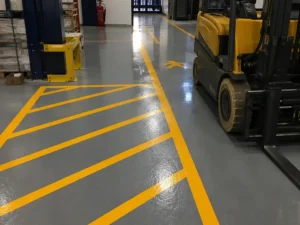
Use Consistent Colours Throughout the Warehouse
Consistency is just as important as the colours themselves.
Employees should always be able to recognise different areas of the warehouse instantly without needing to stop and think about what each marking represents. Using the same colours throughout will create a visual language that becomes familiar to everyone working on site.
Many warehouses use different colours in order to distinguish pedestrian walkways and vehicle routes. While every facility may adopt its own colour scheme, maintaining consistency across the entire warehouse will help to reduce confusion and will improve safety levels as a whole.
When new areas are added or existing layouts are modified, it is always good practice to continue using the established colour system so the warehouse remains easy to navigate.
Clearly Define Storage Areas
Clearly marked storage locations play a very important role in keeping warehouses organised.
When pallet spaces and storage bays are accurately marked, employees can quickly identify where stock belongs, which will reduce any mistakes and make inventory management much more efficient across the business.
Having well defined storage zones in place also helps to prevent pallets and equipment from being left in any walkways or vehicle routes, which reduces trip hazards and makes sure that important access routes always remain clear.
As warehouse operations naturally change over time, storage layouts should also be reviewed to make sure that the existing markings continue supporting the way the facility is used.
Always Consider Emergency Routes
Emergency routes are one of the things that should never be overlooked when planning warehouse line markings.
It is important that escape routes remain clearly visible and completely free from equipment or any other types of obstructions. Fire exit floor markings can reinforce these routes by providing everyone with clear visual guidance towards emergency exits while also highlighting areas that must always remain accessible.
It is equally important to identify the locations of fire extinguishers and alarm points along with the first aid equipment. During an emergency, clear floor markings can help employees to locate essential safety equipment quickly and reduce confusion during an evacuation.
Always Choose Durable Materials When Marking Your Warehouse
The materials that you use for marking the lines of your warehouse will have a significant impact on how long the markings will remain effective for.
Warehouses that experience constant forklift traffic or heavy machinery place much greater demands on floor markings than areas used primarily by pedestrians. Choosing materials that are appropriate for the environment helps maintain visibility while reducing the need for frequent repairs.
Before deciding which marking system to use, it’s worth considering factors such as traffic levels, floor condition, cleaning routines and the day to day activities taking place within the warehouse. Although lower cost materials may seem attractive initially, investing in durable products often provides better long term value through reduced maintenance and fewer interruptions to operations.
Keep Warehouse Markings Well Maintained
Even the highest quality warehouse line markings will eventually begin to wear.
Regular inspections allow faded or damaged markings to be identified before they become difficult to see. Refreshing worn markings helps maintain clear traffic routes, protects pedestrian areas and ensures the warehouse continues operating safely.
Rather than waiting until markings have almost disappeared, many businesses choose to include line marking inspections within their planned maintenance schedule. This proactive approach helps preserve both safety and the professional appearance of the facility.
Common Warehouse Line Marking Mistakes
Even well managed warehouses can encounter problems if floor markings aren’t properly planned or maintained. Some of the most common mistakes include:
- Allowing pedestrian and vehicle routes to overlap unnecessarily.
- Using inconsistent colours throughout the warehouse.
- Creating storage areas that obstruct access routes.
- Failing to update markings when warehouse layouts change.
- Ignoring faded or damaged markings.
- Choosing materials that aren’t suitable for heavy traffic.
Avoiding these issues from the outset usually results in a warehouse that is safer, easier to navigate and more efficient to operate.
Why Work with Professional Line Marking Specialists?
While warehouse line marking may appear to be a straightforward process, achieving a professional result does require careful planning and accurate measurements.
Professional line marking contractors have a thorough understanding of how warehouse environments operate and can recommend layouts that improve both safety and efficiency while minimising disruption during installation. Each and every warehouse is different, so taking the time to understand how the site functions is essential before any work begins.
At OnPoint Markings, every project starts by assessing how the warehouse is used and identifying any opportunities to improve traffic flow or the organisation. Whether it is a complete warehouse fit out or refreshing worn floor markings, the focus is always on delivering crisp, durable markings that stand up to the demands of busy commercial environments.
With the flexibility to work around your operational schedule, including evenings and weekends where required, OnPoint Markings helps minimise downtime while delivering professional, long lasting results.
Conclusion
Warehouse line marking is about much more than just painting lines onto the concrete floor of the warehouse. A carefully planned layout helps create a safer workplace by improving traffic flow and giving all employees the confidence to move around the building safely.
Whether you are designing a new warehouse or updating an existing facility, following recognised warehouse line marking guidelines can deliver long term benefits for both safety and productivity levels. By investing in careful planning, high quality materials and professional installation, businesses can create warehouse environments that remain organised, compliant and efficient for years to come.
FAQs
What are warehouse line marking guidelines?
Warehouse line marking guidelines are best practice recommendations for using floor markings to improve safety, organisation and traffic management within warehouses and industrial facilities.
Why is warehouse line marking important?
Clear floor markings help separate pedestrians from vehicles, identify storage areas, improve workflow and reduce the risk of workplace accidents.
How often should warehouse floor markings be refreshed?
This depends on traffic levels, floor conditions and the materials used. High traffic warehouses may require more frequent inspections to ensure markings remain clearly visible.
What colours are used for warehouse line markings?
Many warehouses use different colours to distinguish pedestrian routes, vehicle lanes, storage areas and hazard zones. The most important consideration is maintaining consistency throughout the facility.
Should warehouse line marking be completed by professionals?
For most commercial warehouses, professional line marking ensures accurate layouts, durable materials and markings that are designed to support safe and efficient day to day operations.